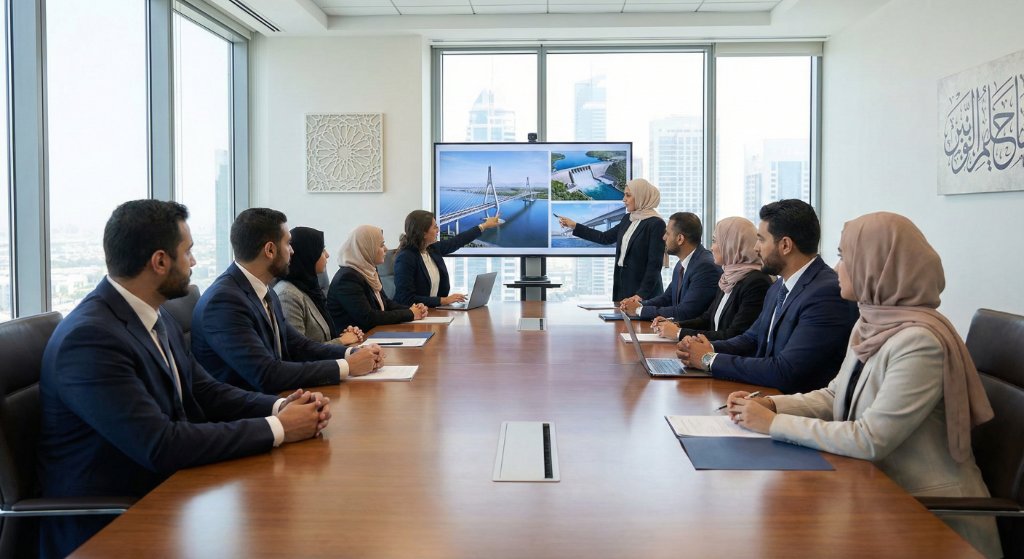
What Is Sukuk?
Asset-backed Islamic certificates representing ownership in real economic activity
Sukuk are Sharia-compliant investment certificates structured around tangible assets, services, or investment activities — designed to generate returns through real economic performance rather than interest.
Sukuk in Simple Terms
Understanding the foundation of Islamic capital markets
Sukuk represent proportional ownership in:
Quick Comparison
Foundational Principles
Four pillars that define Sukuk structures
Asset or Activity Backing
Sukuk must be backed by identifiable assets, services, or investment activities — not abstract debt obligations.
No Interest (Riba)
Returns cannot be predetermined fixed interest. Income must derive from actual economic performance.
Risk Participation
Investors share in the risks of the underlying asset or activity, aligned with Islamic principles of fairness.
Contractual Clarity & Governance
Clear documentation, defined roles, transparent reporting, and strong governance frameworks are essential.
How Sukuk Work
Understanding the structural flow from investors to returns
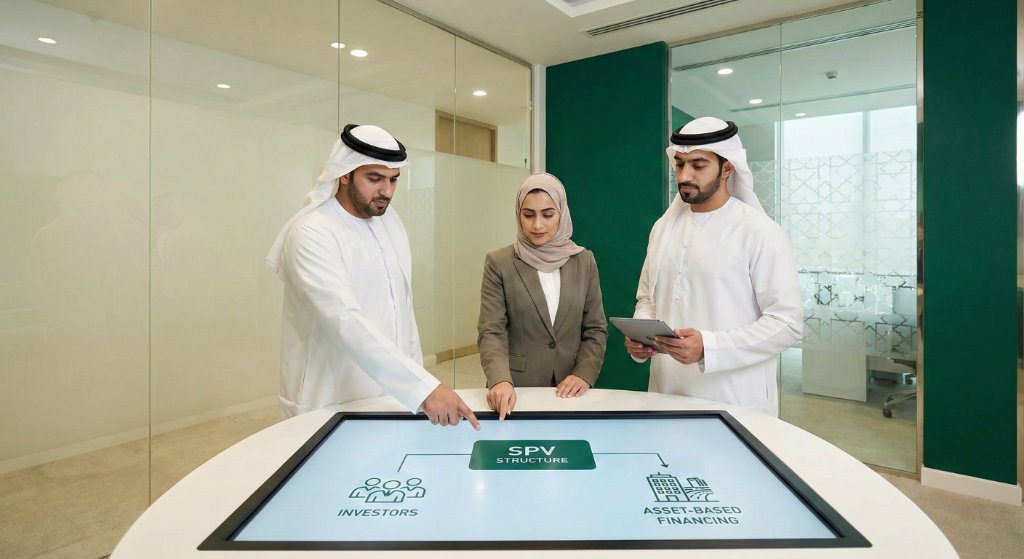
SPV Role
Special Purpose Vehicle holds assets and issues certificates to investors, acting as the legal structure.
Documentation Framework
Master trust deed, offering memorandum, and underlying contracts define all rights and obligations.
Income Source
Returns come from asset rental, business profit, or trade margins — not predetermined interest.
Governance Controls
Trustee represents investors, Sharia board ensures compliance, servicers manage operations.
Distribution Mechanism
Periodic distributions to certificate holders based on actual income received from underlying activity.
Exit or Maturity
Asset sale, redemption, or refinancing at maturity returns capital to investors per documentation.
Main Categories of Sukuk
Different structures for different financing needs
Asset-Based
Partnership-Based
Trade-Based
How Investors Earn Returns
Returns are derived from contractual economic activity, not fixed interest
Rental Payments
IjarahRegular rental income from leased assets distributed to certificate holders periodically.
Profit Sharing
Mudaraba/MusharakaBusiness profits distributed according to agreed ratios after expenses and reserves.
Trade Margins
MurabahaMark-up from asset sale distributed as per payment schedule.
Hybrid Income
Combined StructuresMultiple income streams from different underlying contracts within one Sukuk.
Understanding Risk in Sukuk
Sukuk are investment instruments — not risk-free deposits
Key Risks
- Counterparty risk (obligor default)
- Asset performance risk
- Operational and management risk
- Legal enforceability risk
- Market liquidity risk
- Currency and interest rate exposure
Governance Safeguards
- Strong documentation and contracts
- Transparent monitoring and reporting
- Trustee representation for Sukukholders
- Independent Sharia Supervisory Board
- Regular audit and compliance reviews
- Clear default and remedy procedures
Global Adoption of Sukuk
Sukuk are widely issued by governments, infrastructure entities, banks, and corporates worldwide for financing infrastructure, transportation, energy, real estate, and social development projects.
Gulf Cooperation Council
Infrastructure, real estate, energy projects
Southeast Asia
Corporate financing, Islamic banking expansion
Middle East & North Africa
Sovereign development, social housing
Europe & Americas
Ethical investment, infrastructure bonds
Sukuk vs Equity vs Bonds
A structured comparison of investment instruments
| Feature | Sukuk | Equity | Bonds |
|---|---|---|---|
| Asset Link | Yes, asset or activity-backed | Optional (business assets) | No direct asset link |
| Income Type | Profit, rent, or trade margin | Dividends (discretionary) | Interest (fixed) |
| Capital Guarantee | No guarantee | No guarantee | Usually principal protected |
| Governance | Contract-based + Sharia board | Corporate law + shareholders | Debt covenants + trustees |
| Risk Model | Risk-sharing | Risk-bearing | Risk-transfer |
| Tradability | Varies by structure | Freely tradable | Freely tradable |
Sukuk Structuring on Ribano
Comprehensive platform for structuring, issuing, and managing Sukuk
Learn Sukuk
Comprehensive educational resources from beginner to expert level
Sukuk Academy
Structured learning paths for each Sukuk type
Dedicated Books
In-depth guides per structure with real examples
Certification Tracks
Earn professional certifications in Sukuk structuring
Practical Case Studies
Real-world implementations and lessons learned
Frequently Asked Questions
Common questions about Sukuk
Are Sukuk guaranteed by issuers?
Are Sukuk tradable on secondary markets?
Can Sukuk default?
Who supervises Sharia compliance?
How do investors exit Sukuk before maturity?
What makes Sukuk different from Islamic equity funds?
Understand Islamic capital.
Structure it with confidence.
Master Sukuk principles and start structuring compliant instruments on Ribano's comprehensive platform.