Sukuk Types
Explore structured Islamic financing models designed for asset-backed, equity-based, and project-based capital formation
Ribano supports multiple Sukuk structures — each designed to align with Sharia principles, economic substance, governance clarity, and transparent reporting.
What is a Sukuk?
Understanding the foundation of Islamic capital markets
Sukuk represents ownership in assets, services, or investment activities — not debt obligations. Unlike conventional bonds, Sukuk are linked to real economic activity with returns derived from asset income or business profit.
Key Principles:
Sukuk vs Conventional Bonds
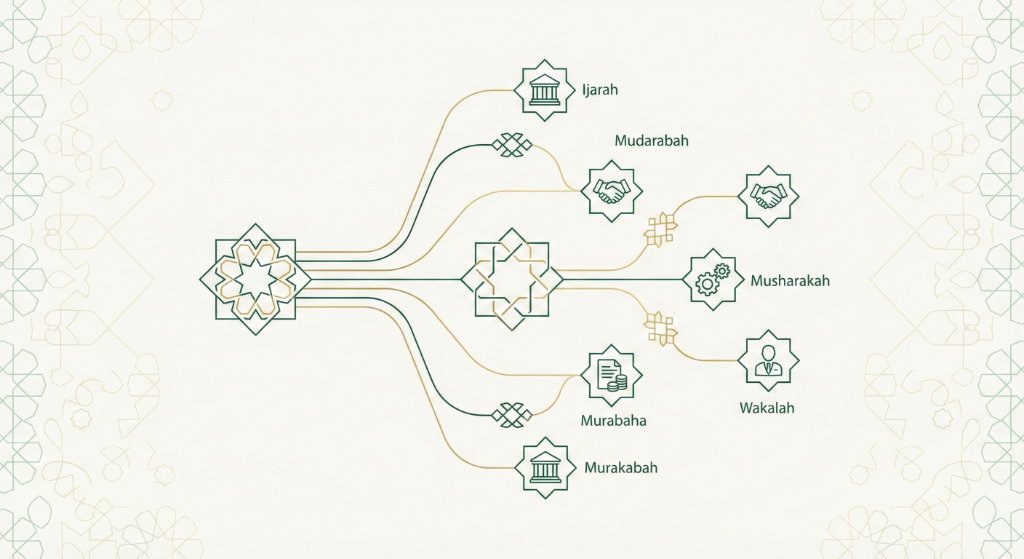
Sukuk Classification
Three main families of Islamic financial instruments
Asset-Based Sukuk
Sukuk Ijarah
Based on lease of tangible assets with rental income distribution
Sukuk Istisna
Construction and manufacturing-based for project development
Partnership-Based Sukuk
Sukuk Mudaraba
Capital + expertise partnership model with profit-sharing structure
Sukuk Musharaka
Joint partnership with shared management rights and responsibilities
Trade & Hybrid Sukuk
Sukuk Murabaha
Cost-plus financing based on asset trading principles
Hybrid Sukuk
Combination of multiple Sukuk structures for complex needs
Structure Comparison Matrix
Compare key characteristics to choose the right Sukuk type
| Type | Return Source | Capital Protection | Risk Profile | Best For | Governance | Tenor |
|---|---|---|---|---|---|---|
| Ijarah | Rental income | No (asset value risk) | Medium | Stable income seekers | Moderate | 3–10 years |
| Mudaraba | Business profit | No | High | Growth investors | Complex | 5–7 years |
| Musharaka | Partnership profit | No | High | Active partners | Complex | 5–10 years |
| Istisna | Construction profit | Partial | Medium-High | Project investors | Moderate | 3–5 years |
| Murabaha | Trading margin | Higher | Low-Medium | Conservative investors | Simple | 1–3 years |
When to Use Each Sukuk Type
Scenario-based recommendations for selecting the right structure
Real estate asset
Construction project
Operating business
Joint venture
Trade financing
Sovereign infrastructure
Sovereign & Government Sukuk
Sukuk structures are widely adopted by governments and public sector entities worldwide for financing infrastructure, transportation, utilities, and social development projects.
- Sovereign issuances for national infrastructure
- Municipal Sukuk for local development projects
- Public-private partnership structuring
- Cross-border and multi-currency issuances

How to Issue Sukuk on Ribano
Streamlined end-to-end platform for Sukuk structuring and issuance
Select Structure
Choose the Sukuk type that fits your needs
Load Template
Use pre-approved documentation templates
Define Asset or Activity
Specify underlying asset or business activity
Configure Profit/Rental
Set distribution terms and schedules
Set Governance Controls
Define decision-making framework
Launch Offering
Publish and start subscription campaign
Ribano Sukuk Academy
Comprehensive education resources for every Sukuk structure
Each Sukuk Type Includes:
- Dedicated book for each Sukuk type
- 10+ short video lessons per structure
- Risk mapping and mitigation strategies
- Governance guidance and best practices
- Certification track with assessment
- Real-world case studies
Earn Professional Certifications
Complete comprehensive learning paths and earn recognized certifications for each Sukuk structure:
- Ribano Certified Ijarah Specialist
- Ribano Certified Mudaraba Specialist
- Ribano Certified Musharaka Specialist
- Ribano Sukuk Structuring Expert
Frequently Asked Questions
Common questions about Sukuk structures
Is Sukuk safer than equity?
Can Sukuk guarantee capital?
Are Sukuk tradable?
What happens in default?
Who supervises Sharia compliance?
How do I choose the right Sukuk type?
Structure Islamic capital with clarity and confidence
Choose the right Sukuk structure for your financing needs with Ribano's comprehensive platform